Text and Tradition in South India by Velcheru Narayana Rao
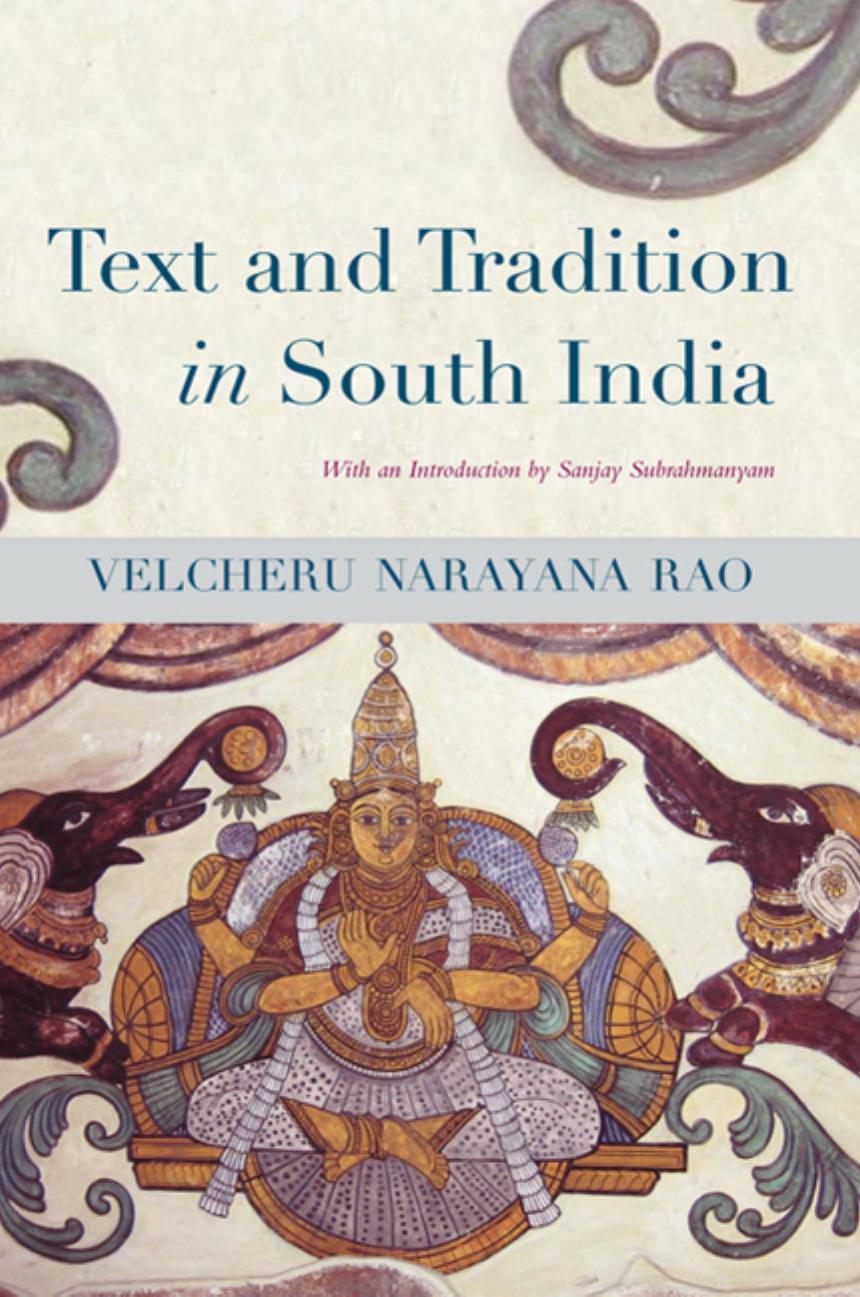
Author:Velcheru Narayana Rao
Language: eng
Format: epub, pdf
Publisher: State University of New York Press
Published: 2017-03-08T16:00:00+00:00
The Structure of the Songs
The structure of these songs, which open with praise of Rāma before moving on to the story at hand, might appear somewhat commonplace, but becomes significant in relation to the time and place of their performance. The songs are usually sung in the late afternoon, after the midday meal, when the men of the family have all retired to the front part of the house to take a nap or chat on the porch, the younger among them perhaps playing cards. Having been served a good meal, they now want to be left alone, to relax and rest, until evening. Their daily chores completed, the women are now free from marital and family obligations, at least for the moment. This is their own time, during which they can do what they please—provided, of course, that they don’t violate the norms of good behavior. Very much like the place in the house where the songs are sung, then, this time period is largely insulated from the demands of the men, for whom women must otherwise play their dutiful roles.
A Brahmin house is divided into three areas. The front is where the men sit, conduct business, receive guests, or chat among themselves. Except when they are called for meals or when they retire for the evening, men do not usually go into the interior of the house, and when they do, they indicate their arrival by coughing or calling to one of the women from outside, who then comes into the middle part of the house to receive them. The middle part of the house is a relatively neutral area, where men and women meet together. In the back of the house are located a kitchen and a verandah opening into the backyard, often with a well in it. It is here that women gather. Women visitors, servants, and low-caste men use the back entrance of the house to converse with the women.
At the front of the house, the conventional male-dominated values reign supreme, but the back part of the house, and to a somewhat lesser extent the interior, are primarily the women’s domain. Women are relatively free here from the censuring gaze of their men, and thus enjoy some measure of control over their own lives. Men are even ridiculed for lingering in the back of the house, although male relatives of the wife’s family may enter, as can the husband’s younger brothers if they are much younger than the wife.
The structure of the songs precisely replicates the structure of the house. Each song begins with a respectful tribute to Rāma, the king. Rāma in these songs is not only God, as in bhakti Rāmāyaṇas, but also the yajamāni, the master of the house—albeit a master who is not entirely in control. This opening dutifully made, the song moves toward the interior—and the people who inhabit the interior of the songs are mostly women. Much like certain male relatives, however, some men are allowed to enter this area: Lakṣmaṇa, the younger brother-in-law; and Lava and Kuśa, the young twins.
Download
Text and Tradition in South India by Velcheru Narayana Rao.pdf
This site does not store any files on its server. We only index and link to content provided by other sites. Please contact the content providers to delete copyright contents if any and email us, we'll remove relevant links or contents immediately.
4 3 2 1: A Novel by Paul Auster(12372)
The handmaid's tale by Margaret Atwood(7757)
Giovanni's Room by James Baldwin(7325)
Asking the Right Questions: A Guide to Critical Thinking by M. Neil Browne & Stuart M. Keeley(5757)
Big Magic: Creative Living Beyond Fear by Elizabeth Gilbert(5754)
Ego Is the Enemy by Ryan Holiday(5413)
The Body: A Guide for Occupants by Bill Bryson(5080)
On Writing A Memoir of the Craft by Stephen King(4931)
Ken Follett - World without end by Ken Follett(4723)
Adulting by Kelly Williams Brown(4565)
Bluets by Maggie Nelson(4547)
Eat That Frog! by Brian Tracy(4525)
Guilty Pleasures by Laurell K Hamilton(4439)
The Poetry of Pablo Neruda by Pablo Neruda(4097)
Alive: The Story of the Andes Survivors by Piers Paul Read(4018)
White Noise - A Novel by Don DeLillo(4002)
Fingerprints of the Gods by Graham Hancock(3995)
The Book of Joy by Dalai Lama(3974)
The Bookshop by Penelope Fitzgerald(3843)
